Home › Common Problems › Fence Damage from Tree Root Growth
Fence Damage from Tree Root Growth
in McKinney, TX
McKinney has a lot of mature trees, and many of them are close to property lines. Tree roots do not grow down — they grow out and sideways, and they follow moisture. A fence post hole filled with concrete sits in moist soil and acts like a target. Roots wrap around the footing and then expand year after year until the footing cracks and the post tilts or rises up out of the ground.
McKinney Fence Repair Pros helps McKinney, TX homeowners fix fence damage from tree root growth — call for a free inspection.
Quick Answer
Tree roots grow toward any moisture in the soil, and fence post holes with concrete hold water. In McKinney, large post oaks and cedar elms near a fence line can send roots under a fence within 10 to 15 years of the tree being planted or the fence being built. The root pushes the post up and sideways and there is no product that stops that. The post usually needs to be relocated.
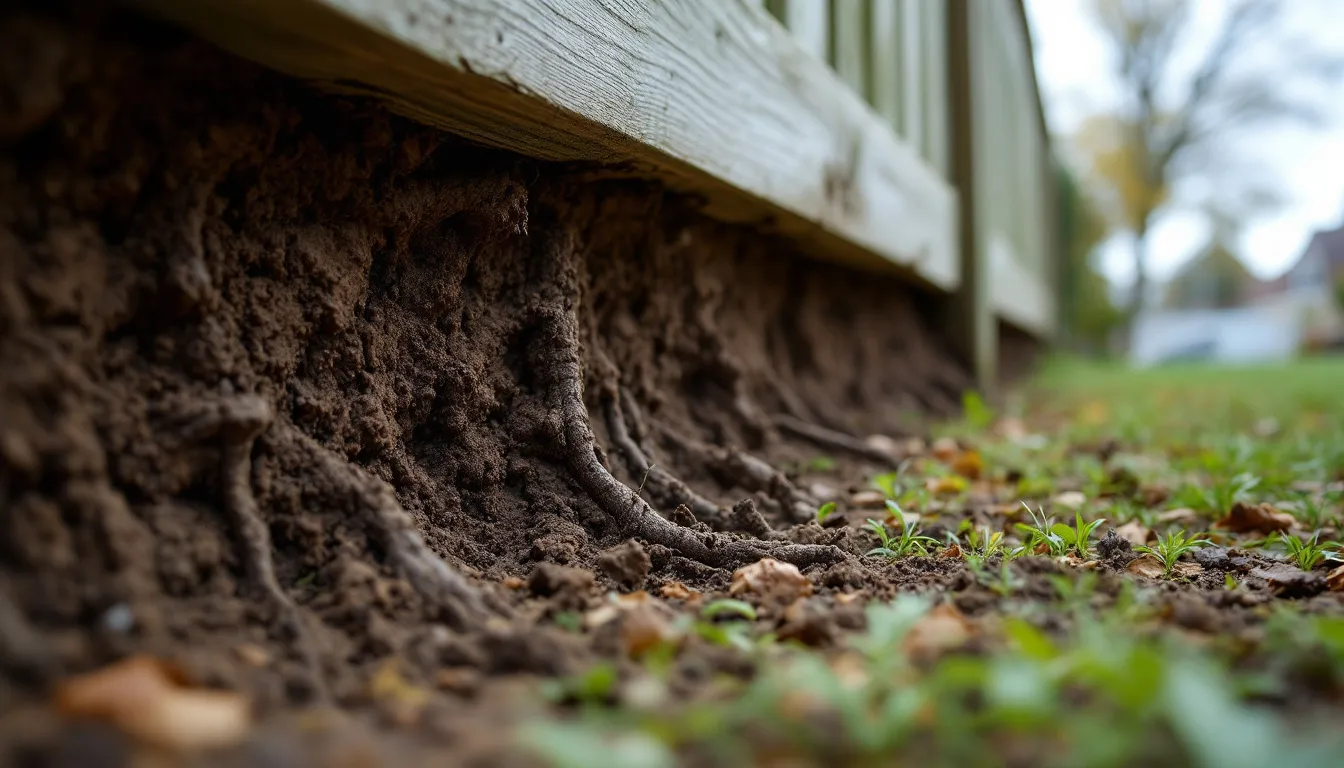
Telltale Signs
Warning Signs to Watch For
- A post has risen several inches above the surrounding ground level
- The concrete footing around a post is cracked or fractured and a root is visible
- A fence panel bows or buckles where a root has pushed up under a rail
- The soil near the post base has heaved and cracked in a pattern around the post
- A post leans away from a nearby tree rather than toward it
- Fence boards are warped or cracked along the bottom rail near tree roots
Root Causes
What Causes Fence Damage from Tree Root Growth?
Surface Root Lifting Post Footings
Post oak and cedar elm trees common in older McKinney neighborhoods grow aggressive lateral roots within the top 12 to 18 inches of soil. Those roots grow outward at up to 3 feet per year and do not stop for concrete. As the root thickens each year, it pushes the footing upward. A post that has risen 2 inches has almost certainly lost its structural depth.
The Fix
Post Relocation and Root Management
We remove the affected post and footing, cut the root back as far as reasonable without harming the tree, and relocate the post at least 18 inches away from the original hole. Root barriers made of dense plastic can be installed in the new hole to redirect future growth.
Root Growth Along Fence Rail Line
When a tree is planted near a fence, its roots eventually follow the fence line because disturbed soil along a fence is looser and easier to grow through than compacted yard soil. The root runs horizontally and lifts the entire fence rail in a wavy pattern. This is most visible from the end of a fence run where the rail profile shows the rise and fall.
The Fix
Rail Replacement and Root Barrier Installation
We replace the damaged rail and install a vertical root barrier at least 18 inches deep along the fence line between the tree and the fence. The barrier redirects root growth downward and away from the fence structure.
Self-Diagnosis
Which Cause Applies to You?
Check the signs you're observing to narrow down the likely root cause before your inspection.
| What You're Seeing | Surface Root Lifting Post Footings | Root Growth Along Fence Rail Line |
|---|---|---|
| Post has risen above grade and a root is visible at or near the base | ||
| The fence rail has a wavy up-and-down profile along a run near a tree | ||
| The post leans away from a nearby tree trunk | ||
| Soil has heaved in a line running parallel to the fence for several feet | ||
| Concrete footing is fractured and visible pieces have shifted apart |
Free Quote
Get a free quote in McKinney
No obligation — tell us what's going on and we'll text you back shortly.
Other Problems
Services That Fix This
Fence Damage from Tree Root Growth Near You
Also Helpful