Home › Common Problems › Sagging or Broken Fence Gate
Sagging or Broken Fence Gate
in McKinney, TX
Gates fail faster than fence panels because they carry more weight with less support. In McKinney, the clay soil shifts enough each year that even a properly installed hinge post can start to lean within 5 to 7 years. Once that post tilts even a few degrees, the gate drops at the latch side and stops closing right. A gate that does not latch is a problem if you have a pool or pets.
McKinney Fence Repair Pros helps McKinney, TX homeowners fix sagging or broken fence gate — call for a free inspection.
Quick Answer
Gates sag in McKinney mostly because the hinge post leans — and hinge posts lean because the clay soil here keeps moving the concrete footing. A sagging gate is also a security and safety issue if it stops latching. Tightening the hinges helps for a week but does not fix the real problem. The post usually needs to be reset before the gate works right again.
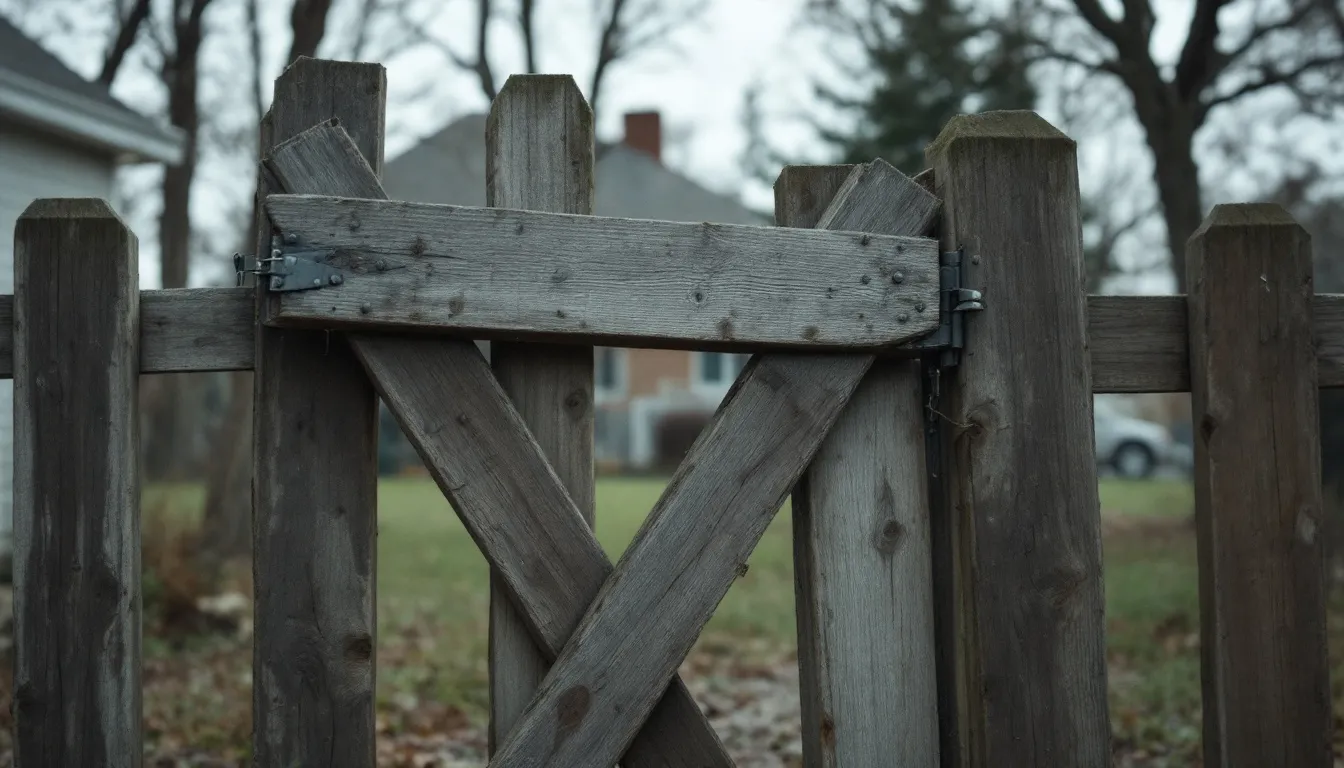
Telltale Signs
Warning Signs to Watch For
- The gate drags on the ground when you try to open it
- The latch side of the gate hangs lower than the hinge side
- The gate swings open on its own instead of staying where you leave it
- The latch bolt no longer lines up with the strike plate
- Hinges are pulling away from the post or the gate frame
- The gate frame has racked so the corners are no longer square
Root Causes
What Causes Sagging or Broken Fence Gate?
Leaning Hinge Post
The hinge post carries all the weight of the gate every time it opens and closes. In McKinney's clay soil, that post sees more movement than any other post in the fence. Over time it tilts slightly forward or to the side, and the gate follows it. Even a 2-inch lean at the top translates to a gate that drags and won't close.
The Fix
Hinge Post Reset with Concrete Footing
We dig out the hinge post, clear the old concrete, and reset it plumb in a new footing. The footing goes deeper than standard posts — at least 30 inches — because hinge posts carry more load. Once the post is plumb, the gate usually hangs right again.
Weak or Failing Gate Frame
A lot of residential gates in McKinney are built with the same lightweight rails used for fence panels. That works fine for a short gate but a standard 4-foot double gate or a driveway gate needs a heavier frame. Without a diagonal brace inside the frame, the gate racks over time and the corners go out of square.
The Fix
Gate Frame Rebuild with Diagonal Brace
We rebuild the gate frame using heavier lumber or steel and add a proper diagonal tension brace running from the top-hinge corner to the bottom-latch corner. That brace carries the load and keeps the frame square for years.
Undersized or Stripped Hinges
Standard residential strap hinges are rated for a specific weight and they get stripped out when a gate is heavier than they can handle. This is common on cedar gates wider than 4 feet. Once the screws strip out of the wood, the hinge rocks every time the gate moves and the damage gets worse fast.
The Fix
Hinge Upgrade and Wood Repair
We replace undersized hinges with heavy-duty bolt-through hinges that go all the way through the post and gate frame. Stripped screw holes are filled with epoxy wood filler and allowed to cure before the new hardware goes in.
Self-Diagnosis
Which Cause Applies to You?
Check the signs you're observing to narrow down the likely root cause before your inspection.
| What You're Seeing | Leaning Hinge Post | Weak or Failing Gate Frame | Undersized or Stripped Hinges |
|---|---|---|---|
| The gate hangs low on the latch side and the hinge post leans visibly | |||
| Gate corners are no longer square and the frame has twisted | |||
| Hinges wobble or pull away from the post when the gate moves | |||
| Gate swings open by itself when released on flat ground | |||
| Gate is wider than 4 feet and the problem started within 2 years of installation |
Free Quote
Get a free quote in McKinney
No obligation — tell us what's going on and we'll text you back shortly.
Other Problems
Services That Fix This
Sagging or Broken Fence Gate Near You
Also Helpful